Edge AI Domain Controller brings high-performance edge intelligence to ECUs
14. January 2026 | Planegg
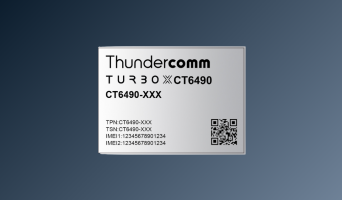
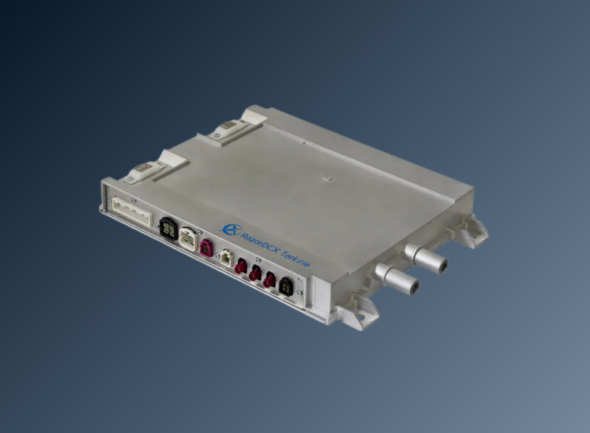
Thundercomm’s Edge AI Domain Controller, based on Qualcomm® QCS9100, is a production-ready edge computing platform designed for use in modern intelligent systems, such as robotics, autonomous vehicles, low-speed industrial vehicles, and mobile machinery. For example, in ECUs for heavy machinery, it provides a structured compute foundation for perception, localization, environmental understanding, and planning, thereby reducing dependency on cloud latency.
For real-time edge inference, the platform delivers up to 200 INT8 TOPS (sparse) or 100 INT8 TOPS (dense), paired with an octa-core Kryo Gen 6 CPU up to 2.36 GHz and an Adreno 663 GPU for advanced graphics processing. This makes it ideal for mission-critical multi-sensor fusion workloads where cameras, radar, and additional sensors need to be processed reliably.
The controller offers rich interface support, including up to 12 cameras, multiple radar modules, ultrasonic sensors via DSI, 8x CAN FD, and automotive Ethernet. Designed for harsh industrial environments and mobile use cases, it supports wide operating temperatures and includes security features such as an internal HSM for secure boot and cryptography, as well as an external security chip for enhanced protection.
FAQ
What is the controller’s role in heavy machinery solution ECUs?
It serves as a high-performance edge compute platform for real-time perception, multi-sensor fusion, localization, and planning on mobile machines and industrial vehicles.
What sensor and vehicle interfaces are supported?
Support includes up to 12 cameras, radar, ultrasonic sensors, 8x CAN FD, and automotive Ethernet for connected machine architectures.
How is security addressed for industrial and automotive-grade deployments?
With an internal HSM for secure boot and cryptography, plus an external security chip to strengthen an automotive-grade cybersecurity architecture.